Your Smile Is Too Important to Trust to Chance — Why an Orthodontist Is the Only Right Choice for Invisalign
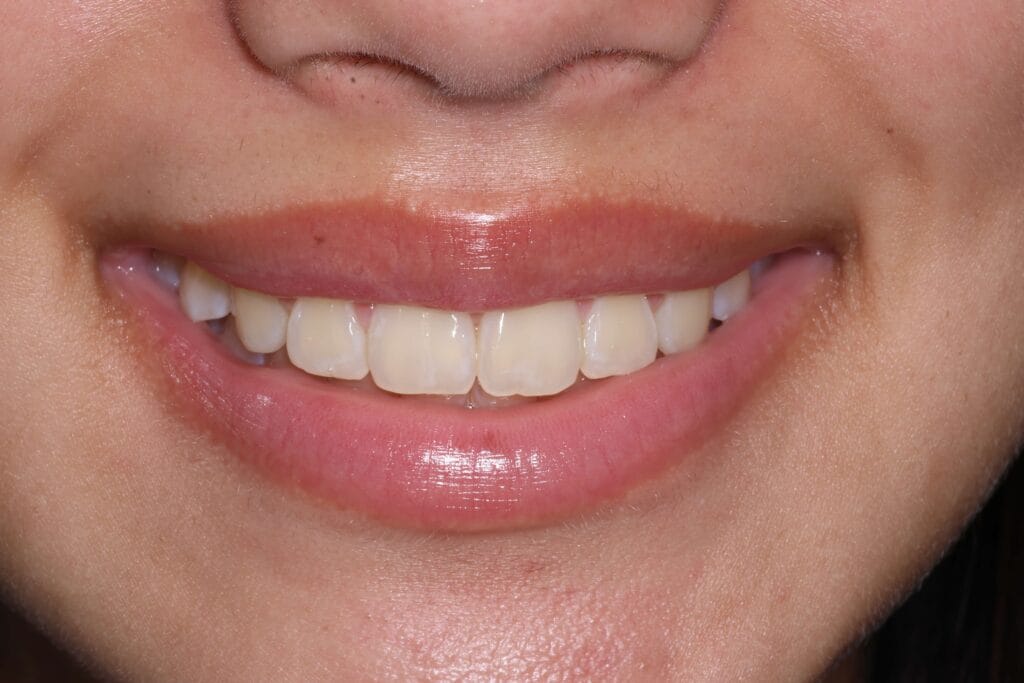
Expert Patient Education
Your Smile Is Too Important to Trust to Chance
Why an Orthodontist Is the Only Right Choice for Invisalign
Dr. Shaun Dadjoo — Board Certified Orthodontist —Eastman Institute for Oral Health Graduate
She sat in the chair, smiled politely, and told me she had “basically finished” her Invisalign — done by her general dentist. But something was off. Her bite didn’t close the way it should. Her jaw shifted when she chewed. And the crowding, while better, wasn’t truly resolved.
This isn’t a rare story in my practice. It’s one I hear more than you’d think. And every time, I feel the same mix of empathy and quiet concern — not for the dentist, but for the patient who simply didn’t know they had a better option available to them, right here in Porter Ranch.
I’m Dr. Shaun Dadjoo, a board-certified orthodontist at Dadjoo Orthodontics. I want to be honest with you in this article — not to disparage general dentists, who are skilled, dedicated professionals — but to make sure you understand what separates a true orthodontic specialist from someone who completes a weekend Invisalign certification course. Your smile deserves that clarity.
THE PROBLEM
The Chief Complaint: “I Did Invisalign at My Dentist — Why Doesn’t It Look Right?”
When patients come to me after completing orthodontic treatment elsewhere, the issues usually fall into a familiar pattern: teeth that look straighter but a bite that still doesn’t feel right; spaces that closed but midlines that never aligned; and trays that ended treatment before the underlying skeletal issue was ever truly addressed.
These are not small details. Your bite, your jaw position, the way your upper and lower arches relate to each other — these are the foundation of your oral health. Moving teeth without understanding all of these factors is like renovating a house without checking the foundation.
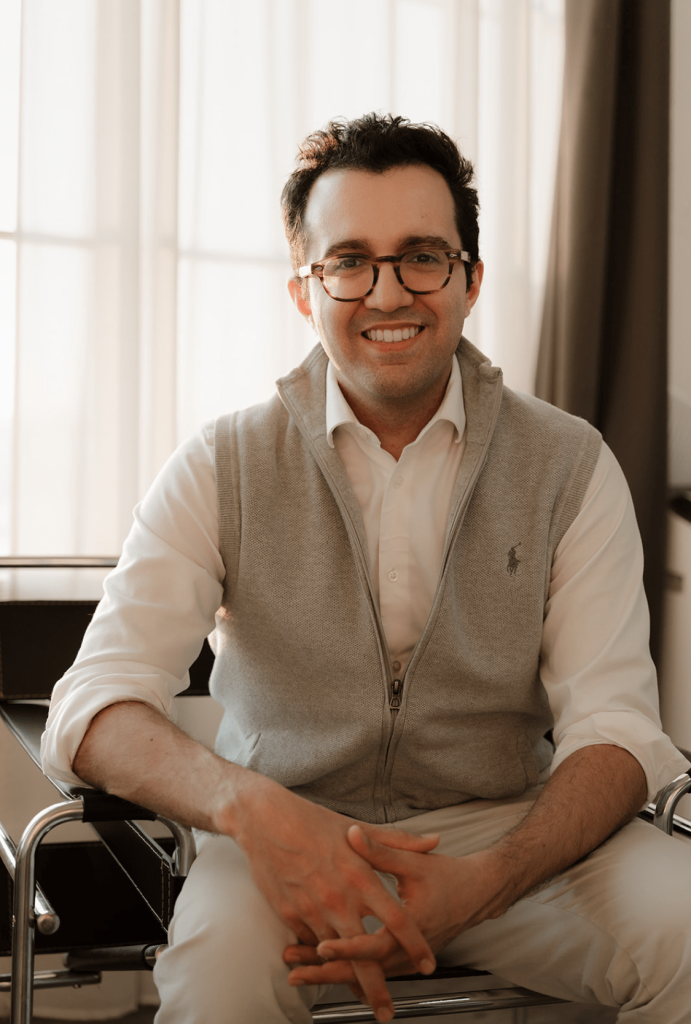
Dr. Shaun Dadjoo, DMD, MS, ABO-Board Certified
Diplomate, American Board of Orthodontics
Eastman Institute for Oral Health, Rochester, NY (#1 Globally Ranked Orthodontic Program)
“Even though I’m trained in cavities, cleanings, and general dentistry — I don’t do them. I refer those patients to talented general dentists who have mastered those techniques. That singular focus is exactly what your orthodontic treatment deserves too. My zone of genius is orthodontics. Every day, every patient, every hour — that’s what I’m getting better at.”
10,000+ hours of clinical orthodontic training
in a CODA-accredited university and hospital program
#1 globally ranked orthodontic program
Eastman Institute for Oral Health, Rochester, NY
ABO Diplomate
a distinction held by fewer than one-third of all orthodontists
A Patient’s Journey
From “Good Enough” to Genuinely Transformed: Maria’s Story
Before — The Call to Adventure “I had crooked upper teeth my whole life. My dentist said Invisalign would fix it in about 12 months. I trusted her — she’d been my dentist for years. Halfway through, I kept noticing my bottom teeth still looked off. I finished the trays, but I never really felt… done.”
Maria, 34, came to Dadjoo Orthodontics after completing 14 months of Invisalign through her general dentist’s office. She had a Class II tendency — meaning her lower jaw was positioned slightly back relative to her upper — and her dental midlines didn’t coincide. These are findings that require nuanced treatment planning and a deep understanding of craniofacial growth and skeletal relationships.
At her consultation, I conducted a full orthodontic records analysis: panoramic and cephalometric radiographs, intraoral and extraoral photographs, and a digital scan of her existing dentition. What I found told the story her trays alone couldn’t tell.
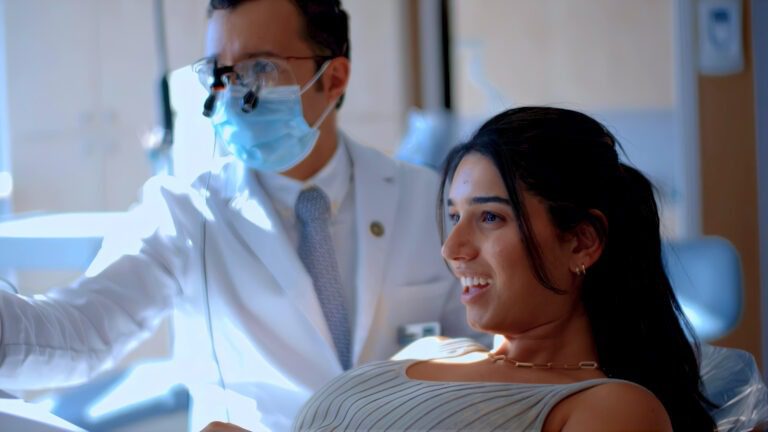
The Ordeal — Facing the Truth “Dr. Dadjoo sat with me and actually showed me what was going on — on screen, with the X-rays. Nobody had done that before. He explained that my jaw position hadn’t been accounted for at all in my first treatment. I felt heard for the first time in this whole process.”
We developed a comprehensive re-treatment plan using Invisalign with precision bite ramps and elastics — tools and techniques that require orthodontic expertise to prescribe and manage correctly. We also addressed her midline discrepancy and finished with a bonded retainer to hold her result for life.
The Difference That Matters
Orthodontist vs. General Dentist: An Honest Comparison
This isn’t about criticism — it’s about clarity. Both professionals went to dental school. But after that, the paths diverge significantly.
Orthodontist (Specialist)
- 2–3 additional years in a CODA-accredited residency
- 10,000+ hours dedicated to tooth movement only
- Trained on simple to complex surgical cases
- Analyzes soft tissue, hard tissue, TMJ, and muscles
- Places and removes braces and Invisalign
- Designs custom retention strategies
- Creates comprehensive, individualized treatment plans
General Dentist
- Broad training across all areas of dentistry
- Expert in cleanings and cavity diagnosis
- Performs crowns, dentures, and extractions
- Provides endodontic treatment
- May complete a weekend Invisalign certification
- Limited orthodontic training in dental school
- Orthodontic care is one portion of a full-service practice
- Does not hold orthodontic board certification
A general dentist is skilled and essential for your overall oral health. But when it comes to aligning your teeth and jaw, there is a profound difference in training depth, diagnostic capability, and treatment precision. In a community like Porter Ranch or Los Angeles, you have access to specialist-level care — you should use it.
In this short video, Dr. Dadjoo breaks down why orthodontic specialization matters and what questions you should always ask before starting Invisalign or braces with any provider.
What Every Patient Should Know Before Starting Invisalign
- Orthodontists are specialists. We complete 2–3 additional years of accredited, full-time residency training beyond dental school — 10,000+ hours focused exclusively on tooth and jaw movement.
- Board certification matters. An ABO Diplomate has passed rigorous clinical and written exams administered by the American Board of Orthodontics — a distinction fewer than one-third of orthodontists hold.
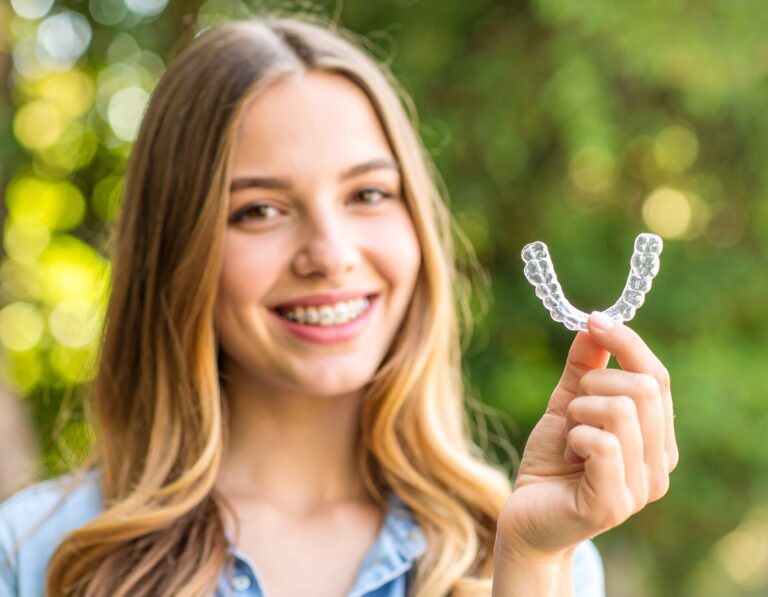
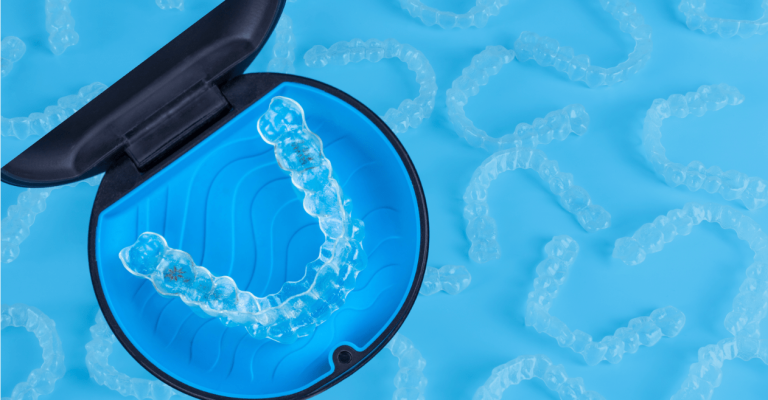
- Invisalign is not a plug-and-play product. The real expertise is in customizing the prescription, managing biomechanics, and knowing when the software’s plan needs to be overridden or refined.
- Your bite is as important as your smile. A beautiful result means your upper and lower teeth occlude correctly, your jaw is comfortable, and your result is retained long-term.
- You have access to specialist care right here in Porter Ranch. Dadjoo Orthodontics offers complimentary consultations and a doctor who has dedicated his career entirely to this discipline.
FAQs
Can my general dentist legally do Invisalign?
Yes — general dentists are legally permitted to offer Invisalign. Invisalign certifies dentists through a training program that can be completed over a weekend. But legality and qualification are not the same thing. An orthodontist brings years of specialized residency training in tooth movement, biomechanics, craniofacial growth, and retention — vastly deeper expertise than a weekend course can provide.
Is Invisalign with an orthodontist more expensive?
Not necessarily — and when you factor in the cost of correcting suboptimal outcomes or retreatment, choosing a specialist from the start is often more economical in the long run. At Dadjoo Orthodontics, we offer complimentary consultations so you can explore your options with zero financial commitment upfront.
What does a board-certified orthodontist actually do differently?
A board-certified orthodontist has passed a comprehensive clinical and written examination by the American Board of Orthodontics, demonstrating mastery beyond standard graduation requirements. Dr. Shaun Dadjoo is an ABO Diplomate and a published researcher — including the first clinical trial on a novel tooth-whitening technique during Invisalign treatment — bringing an evidence-based, scientifically rigorous approach to every case.
Do orthodontists treat children, teens, and adults?
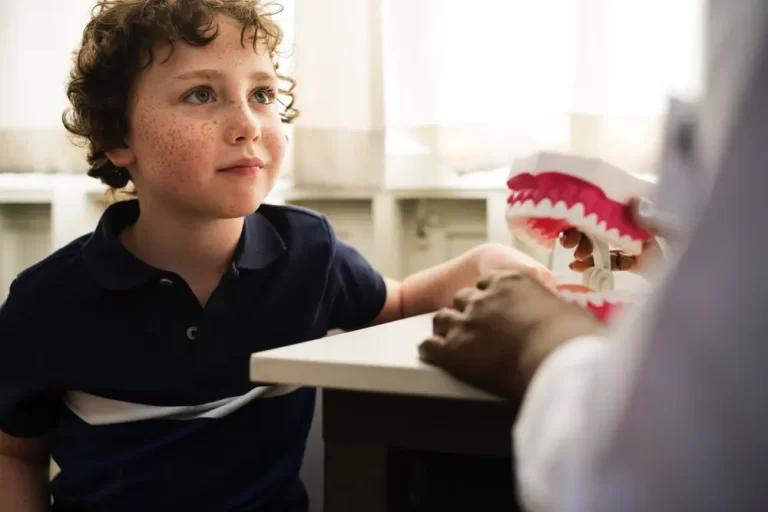
Absolutely. At Dadjoo Orthodontics we treat patients of all ages — from early interceptive orthodontics in children (which can prevent more complex treatment later) to teen braces and adult Invisalign. Early evaluation, ideally around age 7, helps us understand how a child’s bite is developing and whether intervention can simplify future treatment.
What if I’ve already started Invisalign at a general dentist?
Come in for a complimentary consultation. We’ll evaluate your current progress, treatment records, and what refinements or corrections may be needed. It’s never too late to ensure your outcome is everything it should be. Dr. Dadjoo handles Invisalign continuation, refinement, and full retreatment cases regularly.
Does Dr. Dadjoo treat TMJ issues?
Yes. Dr. Shaun Dadjoo has specialized expertise in TMJ disorders and craniofacial growth and development, and offers non-surgical alternatives including specialized appliances for temporomandibular disorder and sleep-related concerns. This is another area where orthodontic specialty training goes well beyond what a general dentist typically provides.
Your Smile Deserves a Specialist
Start with a complimentary consultation. No pressure, no commitment — just an honest, expert evaluation of your smile and what’s truly possible for you.

19950 Rinaldi Street, Suite 306, Porter Ranch, CA 91326
Complimentary consultations for braces, Invisalign, and TMJ/sleep appliances. We treat kids, teens, and adults.